
Every day our dedicated team work tirelessly to care for sick, injured and orphaned wildlife. Here are just a few of the patients that have entered our Centre over the years:
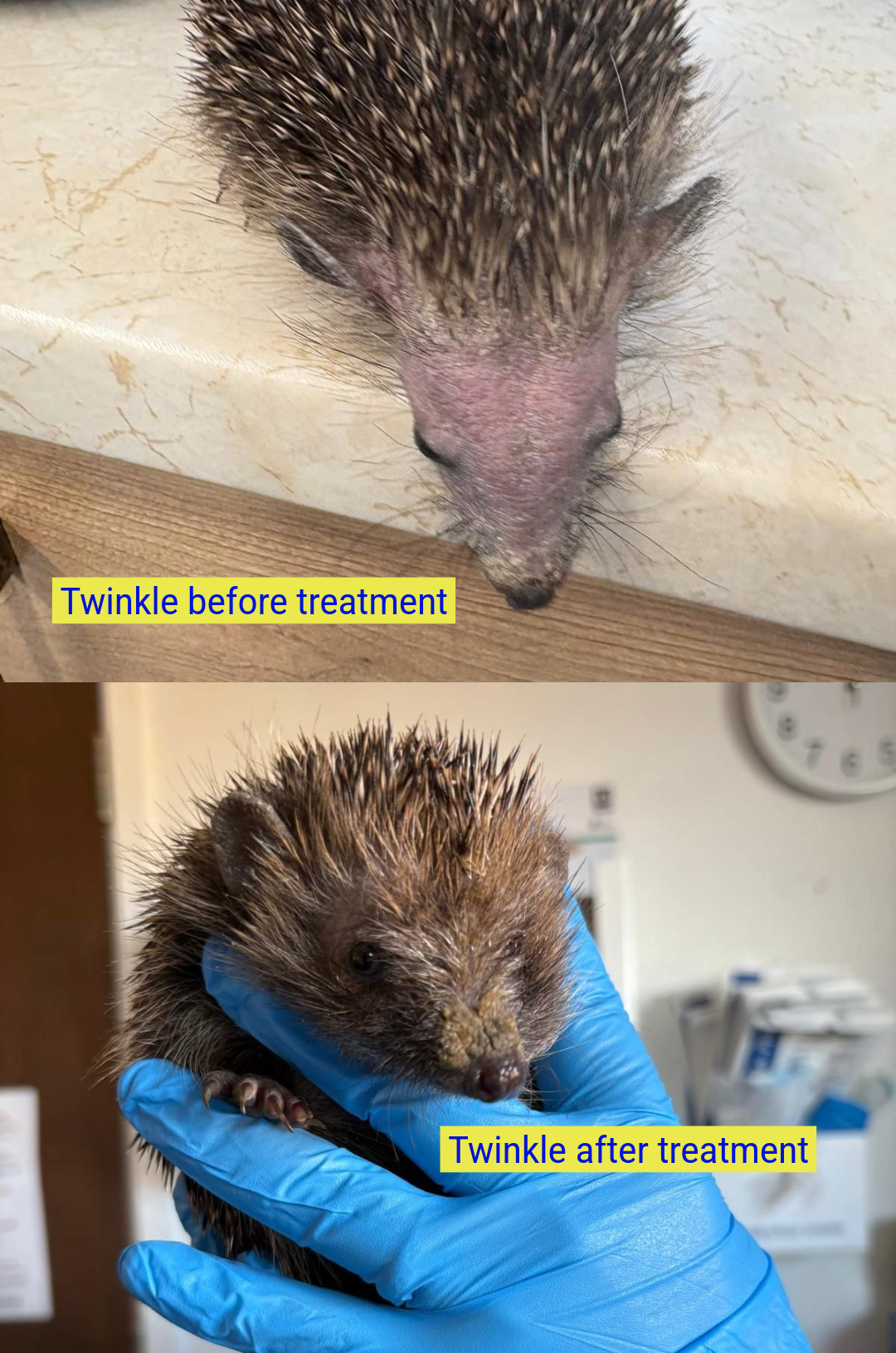
Twinkle: A Hedgehog With Mange
Twinkle, affectionately named by her finder, was found in a back garden with a severe mange infestation. Fortunately, she didn’t lose many of her spines but Twinkle had lost the majority of her fur on her body, limbs and head. She was bald and rather cold, which is a dire situation for a hedgehog to find themselves in during the cold and wet British winter.
As seen in foxes, mange mites cause itchy crusts to develop on the skin. This causes the affected animal to then scratch at the crusts, resulting in fur loss and potentially open wounds. In the top image you can see light crusts on Twinkle's head and her skin is very pink, dry and sore.
Twinkle spent 2 months at the wildlife centre receiving treatment for her mange. During her rehabilitation, Twinkle underwent treatment for her mange and was pampered with soothing creams and oils to help her damaged skin recover and encourage fur regrowth. She showed great improvement and soon looked like a proper hedgehog again. Once her treatment was complete, Twinkle was released into the back garden she has always called home.
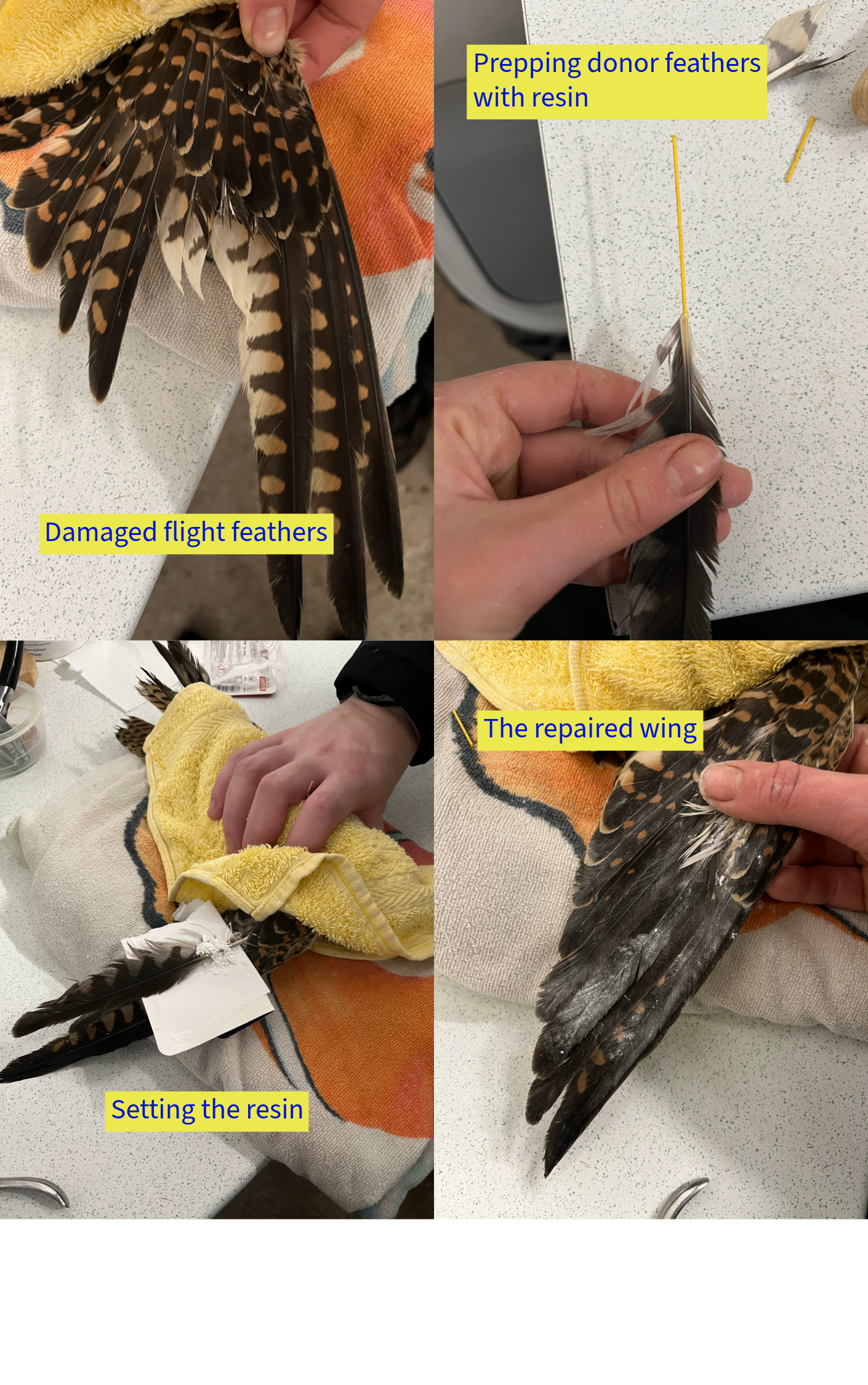
Have you heard of 'imping'?
A case that has stayed with us, for positive reasons, is the case of a female kestrel with missing flight feathers. In October 2023 we admitted a female kestrel with significant damage to her flight feathers on her right wing. This damage impacted her ability to fly and would considerably limit her ability to hunt in the wild. We had two options; wait for her to grow through a molt, which could take a year for her to completely grow back her feathers and remain in captivity, or transplant her damaged feathers in a process called ‘imping’.
Imping is a centuries old method used to repair the damaged or missing feathers of birds. The process involves using a donor feather from the same species and applying a special technique to implant the feather into the feather shaft. The process is completely painless and will allow the bird to fly normally again in a day or so.
We decided to imp her damaged feathers and got in touch with West of England Falconry. They agreed to carry out the procedure and successfully imped three of her primary feathers. After a few days of observation to ensure she was adapting to her new feathers she was successfully released. We’d like to express our gratitude to West of England Falconry for their involvement in the rehabilitation of this beautiful kestrel and ensuring her return to the wild!


